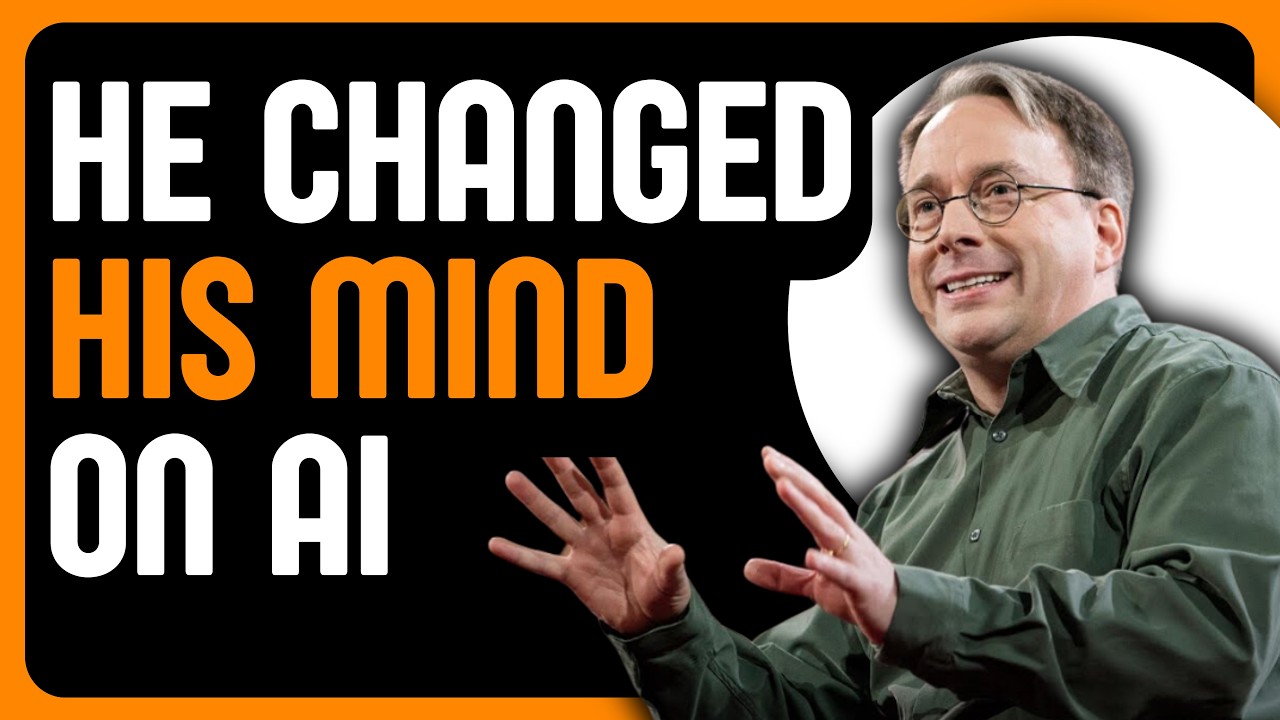
SavvyNik recaps a Linux Foundation stage conversation between Linus Torvalds and Dirk Hohndel at Open Source Summit Europe, focused on how AI is already reshaping kernel work. Linus says AI review bots (the Google-maintained one he calls Sashiko) have become near-mandatory in some subsystems, creating a situation where an AI flood of patches is being met with an AI flood of reviews — useful overall, but a real source of maintainer stress. He also describes his own shift from dismissing AI to using it happily on hobby projects, and argues vibe coding is a good 'gateway drug' into programming while still being risky for serious work.
- AI patch-review bots now run publicly on kernel mailing lists, and some subsystems won't accept patches unless they've been reviewed by the Google-maintained tool first.
- Linus admits AI reviews are often wrong, but shrugs that human reviews are often wrong too.
- The kernel is getting a deluge of AI-generated patches — some catching real security bugs, some fixing code nobody has touched in 20 years — and maintainers are fighting that deluge with their own AI review tooling.
- Three quarters of the discussion at the preceding maintainer summit was about making AI code generation and review less stressful and more useful, which Linus calls a problem for maintainers.
- Linus describes his own arc: he used to think AI was just not very good, then interesting, and now he genuinely enjoys using it — though mostly on toy projects, since he works as a maintainer and technical lead rather than writing much kernel code.
- He argues the bar in software engineering has gotten so high that beginners can't see their own work as worthwhile, and AI lowers that bar enough to let people find joy in programming.
- He still 'poo-poos' vibe coding for real, important projects — the value is as a gateway into programming, and you eventually need to understand the code.
- On his guitar-pedal project, his first AI prompt for a JavaScript UI produced something 'horrendous'; it only worked once he told the AI to reproduce the C implementation he had already written correctly and just give it a pretty face.
- The intro notes Linus previously credited AI with doing the tedious investigation in a 'debug session from hell' — a memory management bug in an Intel GPU driver that booted Linux to a black screen — even after the AI itself suggested giving up.
Linus describes the strangest second-order effect of AI in open source: automated patches being answered by automated reviews, with real maintainer cost attached.
We are to some degree fighting the AI deluge of patches with our own AI deluge of patch review. And people are jokingly saying that there are bots talking to bots, and it does actually happen.
This is the reversal the video is built around — Linus endorsing vibe coding as a way for beginners to find joy, while holding the line on serious code.
I used to poo-poo AI, and I used to poo-poo vibe coding. And I still do for real projects... But I love the concept of AI as a gateway drug into programming.
Some of the complaints that AI sometimes gives in reviews are just wrong. That's reality, and I wouldn't even blame AI for that because some of the reviews that people give are just wrong.
I don't do Java. I don't do all those fancy things. I do kernels. I do manly things. I do low-level programming in C.
I gave it a prompt, and it did it, and it was horrendous.